
Kosten für eine Schönheits-OP werden in der Regel nicht von der Kasse übernommen. Liegt ein entsprechender Krankheitswert vor kann in seltenen Fällen eine Kostenbeteiligung bei der Krankenkasse beantragt werden. Wir werden Sie ehrlich beraten ob eine Kostenübernahmeerklärung an die Krankenkasse Sinn macht und Sie entsprechend unterstützen.
Um Ihnen Ihren Wunscheingriff zu ermöglichen bieten wir individuelle Finanzierungsmodelle und Teilzahlungen an. Lassen Sie sich gerne bei uns beraten.
Breast Lift and Reduction
Breast Lift and Reduction
What is a breast lift or breast reduction?
Over time, due to hormonal changes, aging, and gravity, breast shape and volume can change significantly.
Women with heavy breasts often develop sagging (ptosis) and seek a firmer and more youthful breast shape.
If the breasts are overly large, a breast reduction may also be indicated — many affected patients suffer from chronic neck and shoulder pain.
In principle, both procedures are similar:
- A mastopexy (breast lift) tightens and reshapes existing tissue.
- A reduction mammoplasty additionally removes glandular tissue to reduce volume.
What can I expect from a breast lift or reduction?
Your individual goals are at the heart of our planning.
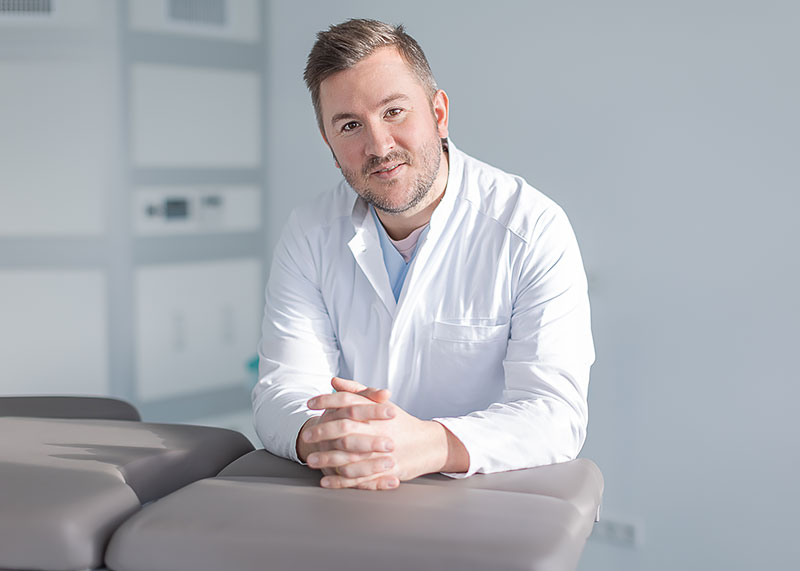
Together with you, Dr. Million and his team design a treatment concept suited to your anatomy and expectations.
The most common technique we use is the inverted T-incision (anchor incision), which allows optimal shaping while maintaining blood supply to the nipple.
Which technique is used?
We often employ the superior-medial pedicle technique, ensuring excellent blood flow and sensation to the nipple.
An additional advantage is the redistribution of glandular tissue to the upper breast pole, providing long-lasting lift and preventing the breast from sagging again.
The glandular tissue is reshaped like an internal bra, giving internal support and volume.
What type of incision is used?
If the lift is minor, a periareolar (O-shaped) incision may be sufficient.
For more extensive tightening, this is combined with a vertical (I-shaped) incision extending toward the breast fold.
If further contouring along the fold is needed, a mini-T or full T-incision is performed.
How is the procedure performed at our clinic?
During the **preoperative consultation**, we discuss every step in detail, perform the necessary examinations, and mark the incision lines. On the **day of surgery**, which takes place in our own facility, we ensure minimal waiting time and personal guidance. Our nursing and anesthesia team will take care of you throughout the procedure. After surgery, you may stay **overnight** in one of our recovery rooms under continuous nursing supervision. After the final examination the next day, you can usually go home.Benefits, risks, and alternatives
After surgery, the breast appears **firmer, lifted, and fuller**. Aging continues naturally, so minor sagging over time is normal. We recommend **overnight monitoring** to reduce the risk of postoperative bleeding.Aftercare instructions
A **compression bra** should be worn for **6 weeks**. Sutures are absorbable, so **no removal is necessary**. You are typically fit for social and professional activities after **5–7 days**. **Sports** can be resumed after **4 weeks**, and **showering** is possible from **day 2**.Will insurance cover the costs?
In some cases, medical necessity may justify cost coverage by health insurance — typically if at least 500 g of tissue per breast must be removed due to physical discomfort.
Partial reimbursement may be possible if a medical indication is documented.
Treatment facts
- Duration?
- 3 h
- Technique?
-
We offer different techniques.
The incision can be made via an inverted T incision,
an I incision or also via an
incision around the areola
(O incision). We most often use a medio-cranial
pedicle of the nipple-areola complex.
- Anesthesia?
- General anesthesia
- Hospital stay?
- Usually inpatient
- Follow-up?
- After 2 and 6 weeks
- Suture removal?
-
Around the areola after 14 days,
otherwise not required
- Aftercare?
-
Compression garments for 6 weeks.
Showering from the 2nd day after surgery.
Socially presentable after 5-7 days.
Sports after 4 weeks.
- Costs?
- Request now
Lassen Sie sich von uns beraten
Gerne berate ich Sie zu Ihrem persönlichen Anliegen im Rahmen meiner Beratungs- und Behandlungssprechstunde. Wir zeigen Ihnen im Falle eines Operationswunsches die gesamten Räumlichkeiten, damit Sie sich auf die angehende Behandlung optimal vorbereiten und einstellen können. Da wir eine Privatpraxis sind und uns mehr Zeit als üblich für unsere Patienten nehmen, bitten wir Sie um Verständnis, dass wir eine Beratungspauschale von 50€ berechnen.
Ihr Dr. Phil Million

Terminanfrage
Buchen Sie direkt Ihren Termin hier:
Kosten und Kostenübernahme
Medkred
Sichere Finanzierung zu fairen Konditionen
Mit unserem Finanzierungspartner medkred.de können Sie sich hochwertige Behandlungen leisten und behalten dabei Ihre finanzielle Freiräume. Wenn Sie Ihren anstehenden plastisch-ästhetischen Eingriff in günstigen, monatlich gleichbleibenden Raten finanzieren zu lassen möchten, hilft Ihnen unser Finanzierungspartner medkred.de gerne dabei.
Ihre Vorteile
- Individuelle Erfüllung der eigenen kosmetischen Wünsche
- Optimale Behandlung
- möglich Finanzierung zu attraktiven Konditionen
- Kurze Wartezeit bis zur Finanzierungszusage
Medkred - Infos zum Ablauf
Weiteren Informationen über den Finanzierungsablauf erhalten Sie auf der Website von Medkred unter www.medkred.de. Oder setzten Sie sich einfach mit dem medkred-Team unter der Rufnummer 0221/390 99 55 0 in Verbindung.

Finanzierungsmöglichkeiten Ihrer Schönheits-OP
Sie wünschen eine Veränderung Ihrer Figur oder Ihres Gesichtes? Dann kommen jetzt viele Fragen auf Sie zu. Eine Frage bei der Machbarkeit einer Schönheits-OP ist auch für viele Menschen die Kostenfrage. Der operative Eingriff bei einem vertrauensvollen Arzt mit hohem Qualitätsanpruch sollte dabei für Sie allerdings im Vordergrund stehen. Je nach gewünschter Behandlung, z.B. eine Brustvergrößerung, eine Fettabsaugung oder eine Bauchdeckenstraffung, variieren die Kosten für diese Operation.
Wir möchten Sie unterstützen
Bei der Frage: „Wie finanziere ich meine Schönheits-OP?“ möchten wir Sie unterstützen. Dass der notwendige Betrag für den Eingriff nicht unmittelbar zur Verfügung steht, soll kein Hindernis für die Erfüllung Ihrer Wünsche sein. Wir zeigen Ihnen unterschiedliche, bequeme Möglichkeiten zur Finanzierung Ihrer Schönheits-OP in Raten.
Finanzierung medizinscher Behandlungen und Schönheit-OPs
Wir haben zwei kompetente Finanzierungspartner gefunden, die sich auf die Finanzierung medizinischer Behandlungen spezialisiert haben und die Ihnen bei Bedarf Ihren Wunsch nach Veränderung und nach einer Schönheits-OP erfüllen können. Bitte prüfen Sie die Angebote eingehend und lassen Sie sich umfassend beraten, damit bei der Rückzahlung keine Probleme aufkommen und Sie sich die monatlichen Raten problemlos leisten können. Konditionen und Ablauf der Finanzierung müssen Sie direkt mit Medkred oder Medipay besprechen. Beide Anbieter stehen Ihnen sowohl online als auch telefonisch zur Verfügung.
